
Table of Contents
Spotting tiny details can make all the difference in coin collecting. But should you use a handheld magnifier or a coin microscope? This guide breaks down the key differences to help you choose the right tool for your collection.
Coin Microscope vs. Handheld Magnifier: A Quick Comparison
|
Feature |
Coin Microscope |
Handheld Magnifier |
|
Magnification Range |
High (20×–200×+) |
Low to moderate (5×–20×) |
|
Detail Visibility |
Excellent for micro-details |
Good for general inspection |
|
Ease of Use |
Moderate learning curve |
Very easy |
|
Stability |
Fixed stand, hands-free |
Handheld, requires steady grip |

Understanding How Coin Collectors Actually Use Magnification Tools
Collectors use magnification in very different ways, depending on their goals.
Everyday Quick Checks
For casual or routine inspection, a small handheld magnifier (10×) works wonders. Imagine sitting at your desk, sorting through new coins or checking pocket change. You can quickly spot obvious scratches, wear, or mint marks without setting up anything fancy. It’s fast, portable, and keeps your collecting flow uninterrupted.
Detailed Analysis and Error Hunting
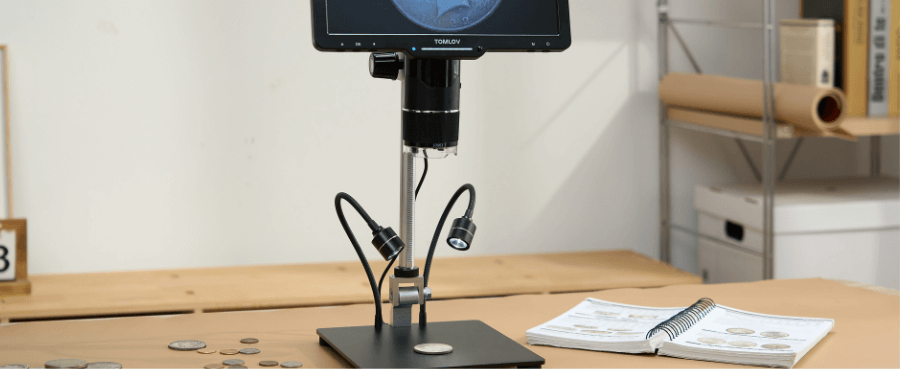
On the other hand, when you’re chasing micro-errors or grading high-value coins, a coin microscope (30×–60×) becomes essential. With steady hands—or better yet, a stable stage—you can study die cracks, micro-doubling, or subtle texture differences. Digital microscopes also let you capture images for records, online forums, or grading submissions, which is a huge help when sharing with other collectors.
Many collectors actually use both tools: a magnifier for everyday checks and a microscope for rare or tricky coins. The key is understanding when precision matters and when speed is enough.
What a Handheld Magnifier Is Best For
Quick Visual Checks and Everyday Collecting
How to use effectively:
-
Hold the magnifier at about 1–2 inches from the coin.
-
Move slowly around the surface, paying attention to corners and rims where wear shows first.
-
For shiny coins, tilt slightly to reduce glare.
Scenario example: Sorting 50 coins from a recent purchase, quickly spotting any obvious errors or unusual marks before placing them into albums.
Portability and Convenience
-
Keep a small 10× or 15× magnifier in your coin bag or desk.
-
Ideal for travel or coin shows.
-
No setup needed, just pick it up and inspect.
Limitations and How to Mitigate Them
-
Hand fatigue after inspecting multiple coins: Use a small stand or rest your arm.
-
Fine errors may be missed: Reserve high-value or rare coins for microscope inspection.
What a Coin Microscope Is Best For
Revealing Fine Details You Cannot See Otherwise
Practical tip:
-
Use 30×–60× magnification for grading most coins; 100×+ only for specific error analysis.
-
Adjust lighting to highlight relief or die imperfections.
Scenario example: Examining a silver dollar for micro-doubling—rotate the coin under LED illumination to detect subtle raised areas invisible to the naked eye.
Stability and Hands-Free Viewing
-
Place coins on the microscope stage.
-
Use the focus knob to slowly bring details into view.
-
Compare multiple coins side by side without moving your hands.
Image Capture and Documentation
-
Connect digital microscopes to a computer or phone.
-
Capture high-resolution images for grading records or to share in online collector communities.
Tip: Use consistent lighting and background to make images clearer.
Limitations and Solutions
-
Field of view narrows at high magnification: start with lower zoom, then increase gradually.
-
Setup time: Prepare a dedicated inspection area with adjustable light and a clean surface.
-
Cheap models may exaggerate zoom: Test clarity before buying.
Related Reading: How to Choose Your First Digital Microscope

Magnification vs. Clarity: Why Bigger Is Not Always Better
-
For general inspection: 10×–20× is sufficient.
-
For error hunting: 30×–60× works best.
-
Avoid jumping to 100×+ unless necessary; clarity, lighting, and stable focus matter more than raw magnification.
Lighting and Ergonomics: Critical but Often Overlooked
Proper lighting and comfortable posture are essential for effective coin inspection.
Lighting tips:
-
Use adjustable LED lights to ensure even illumination.
-
Tilt the coin slightly to minimize glare and reflections, especially on shiny coins.
-
Position lights at different angles to reveal surface relief, texture, and minting details.
Ergonomics tips:
-
For handheld magnifiers, rest your arms on a desk or table to reduce hand and wrist fatigue during longer sessions.
-
For microscopes, adjust your chair height, monitor position, and viewing angle so that you can inspect coins for extended periods without neck or back strain.
By balancing magnification, proper lighting, and ergonomic setup, collectors can achieve clearer, more accurate inspections while avoiding eye strain and fatigue.
Frequently Asked Questions
Is a coin microscope better than a magnifier for beginners?
Beginners often start with a magnifier and upgrade once they want more detail or documentation capabilities.
What magnification is best for coin collecting?
10×–30× for general inspection, 30×–60× for most error detection, 100×+ for specialized analysis.
Can I grade coins accurately with a handheld magnifier?
You can judge general condition, but fine grading details are easier with a microscope.
Are digital coin microscopes worth it?
Yes, if you need stability, high-detail inspection, or image capture. For casual inspection, a handheld magnifier suffices.
Do professional collectors use both tools?
Yes, magnifiers for quick checks, microscopes for in-depth grading and documentation.
Final Thoughts
Handheld magnifiers are ideal for quick, simple inspections, while coin microscopes shine for detailed analysis, grading, and image documentation. By understanding your goals, workflow, and collection type, you can choose the right tool and enjoy your coins with clarity, precision, and confidence.


Commenta
Nota che i commenti devono essere approvati prima di essere pubblicati.
Questo sito è protetto da hCaptcha e applica le Norme sulla privacy e i Termini di servizio di hCaptcha.