

Table of Contents
Textbooks tell students that leaves have cells, but they rarely show the magic of a stoma "breathing" in real-time. This gap between theory and reality makes STEM feel like a chore. By turning the invisible into the tangible, a Microscope for kids or a high-definition Digital Microscope transforms a passive student into an active explorer. Here is how to use microscopy to bridge that gap and spark lifelong curiosity.
The Power of Visual Discovery in STEM
The "STEM Mindset" isn't merely about excelling in mathematics or memorizing the periodic table; it is about building a cognitive framework that asks why and how. Microscopy serves as the ultimate gateway to this mindset because humans are inherently visual creatures. By shrinking the world, we exponentially expand a learner's curiosity.
Building Observation Skills Through the Lens
Observation is the fundamental starting point of the scientific method. When a learner looks through an eyepiece, they aren't just seeing—they are analyzing patterns, identifying anomalies, and developing a "scientific eye."
- The "Sketch and Label" Method: Instead of just looking, have the learner draw what they see. This forces the brain to notice subtle details like cell walls, vacuoles, or cilia that a quick glance would miss.
- Comparison Challenges: Provide two different water samples (e.g., tap water vs. pond water). Ask the learner to list three visual differences. This encourages comparative analysis, a key skill in higher-level research.
- Patience and Precision: Microscopy requires fine-tuning. Learning to use the coarse and fine adjustment knobs teaches physical dexterity and the value of incremental progress.
Connecting the Micro to the Macro
One of the most effective ways to spark lifelong curiosity is to show how the tiny details affect the big world. When students understand that the strength of a bridge or the health of an ecosystem depends on microscopic structures, the world starts to make more sense.
- Material Science at Home: Look at synthetic fibers versus natural wool. Discuss why one is warmer or more water-resistant based on the overlapping scales or smooth surfaces seen under the lens.
- The Kitchen Lab: Examine yeast before and after adding sugar and warm water. Watching a fungus "wake up" and produce carbon dioxide bubbles makes biology feel alive and urgent.

Choosing the Right Microscope for Kids
Not every microscope is right for every learner. Matching the tool to the user's developmental stage is crucial to preventing the "dust-gathering effect," where a tool is too complex or too boring to be used more than once. When looking for a microscope for kids, durability and ease of use should be top priorities.
Simple Tools for Early Explorers (Ages 5-8)
For younger children, traditional compound microscopes can be frustrating. Their fine motor skills are still developing, and squinting through a single eyepiece can be difficult.
- The Rise of the Digital Microscope: In 2026, the Digital Microscope has become the gold standard for early education. These devices plug into a tablet or phone, allowing for "run and gun" science. Kids can look at their own skin, a piece of fruit, or a dog’s fur without needing to prepare complex slides.
- Indestructible Field Tools: Foldscopes or paper-based microscopes are nearly indestructible and perfect for outdoor field trips, allowing kids to explore nature without the fear of breaking expensive glass.
- Reflective vs. Transmissive Light: For beginners, focus on "Reflective Light" (shining light on top of an object). This allows them to look at 3D objects like coins or bugs, which is much more intuitive than preparing thin-sliced transparent slides for "Transmissive Light."
Related Reading: What Is A Digital Microscope And How Does It Work?
Professional Specs for Advanced Learners (Ages 12+)
As curiosity matures, the need for higher resolution and professional-grade slide preparation grows. At this stage, a microscope for kids should start looking and feeling like a real laboratory instrument.
- Compound Microscopes: Look for models with at least 400x magnification and "achromatic lenses" to ensure color accuracy and minimize distortion.
- Integrated Digital Imaging: Modern setups often include a camera mount. Capturing a video of a tardigrade (water bear) moving allows for "Citizen Science" sharing on platforms like YouTube or Discord, turning a solo hobby into a social experience.
- The Prepared Slide Kit: Start with professionally prepared slides (honeybee legs, onion skin) to guarantee an immediate "win" before moving on to the more difficult task of DIY slide making.

Maximizing the Educational Impact: A Practical Checklist
To ensure a microscopy session doesn't end in frustration, preparation is key. A microscope for kids is only as good as the environment in which it is used.
Checklist for a Successful Session:
- Clean Optics: Ensure lenses are wiped with specialized microfiber cloth to prevent blurry images.
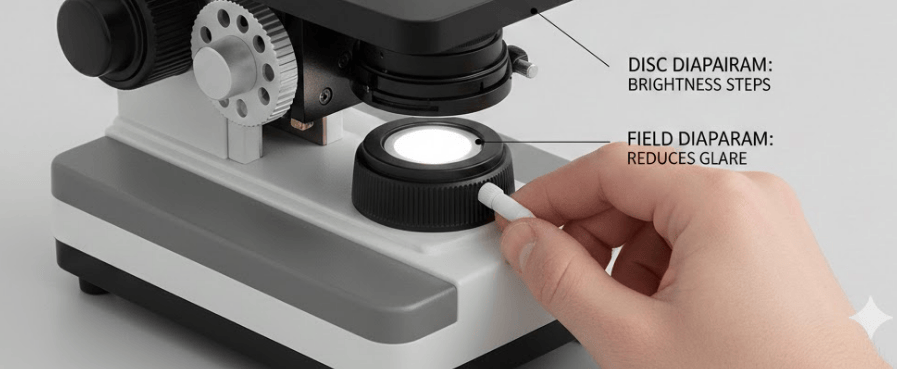
- Lighting Control: Adjust the diaphragm; too much light can "wash out" transparent specimens, while too little makes it impossible to see detail.
- Specimen Variety: Always have at least three different types of samples ready: biological (leaf), mineral (salt), and synthetic (fabric).
- Digital Sharing: If using a Digital Microscope, ensure the device is charged and the software is updated for seamless screen mirroring.
Step-by-Step Decision Guide: Which Microscope is Right for You?
Use this guide to determine how to integrate microscopy into your learning environment based on your specific needs and budget.
-
Identify the User's Age & Patience Level:
- High Energy/Younger: Go with a Digital Microscope or a handheld USB scope. The instant feedback on a screen keeps them engaged.
- Detail Oriented/Older: Go with a Compound Lab Microscope. The tactile feel of glass optics provides a more "authentic" scientific experience.
-
Define Your Primary Environment:
- Outdoor/Fieldwork: Choose a portable LED pocket scope or a ruggedized microscope for kids designed for travel.
- Indoor/Desktop: Choose a stable binocular microscope (two eyepieces), which is significantly easier on the eyes than monocular versions.
-
Set Your Budget:
- Budget-Friendly: Portable digital "plugs" or paper scopes (Under $50).
- Intermediate: Student-grade compound scopes with metal frames ($100 - $300).
- Advanced: High-definition Digital Microscope stations with built-in LCD screens ($300+).
Frequently Asked Questions
What magnification is actually necessary for a beginner?
For most educational purposes, 40x to 400x is the "sweet spot." Many people think more is better, but anything higher (like 1000x) usually requires oil immersion and specialized skills that can easily frustrate a beginner.
Can I see bacteria with a standard microscope for kids?
Yes, but don't expect a movie-quality image. Bacteria will look like tiny moving dots or rods. To see their internal structures, you generally need 1000x magnification and proper staining techniques, such as Gram staining.
Why should I choose a Digital Microscope over an optical one?
A Digital Microscope is superior for collaboration. It allows a parent and child, or an entire classroom, to view the same specimen on a large screen simultaneously. It also allows for easy photo and video capture.
How do I keep a child interested after the "wow" factor wears off?
The key is gamification. Turn it into a challenge-based activity. Ask them to find a "mystery object" in the backyard, zoom in on it, and have you guess what it is based on the microscopic patterns.
Is it worth buying a "toy" microscope?
Generally, no. Many toy-store microscopes use plastic lenses that produce chromatic aberration (rainbow blurring). This can actually kill a child's interest because they can't see anything clearly. It is always better to invest in a "student-grade" microscope for kids from a reputable optics company.
Are there any safety concerns with microscopes?
The primary concerns are the glass slides and the light source. Ensure younger children use plastic slides and "cool" LED lighting to prevent cuts and burns. Always supervise the use of chemical stains.


Commenta
Nota che i commenti devono essere approvati prima di essere pubblicati.
Questo sito è protetto da hCaptcha e applica le Norme sulla privacy e i Termini di servizio di hCaptcha.