
Table of Contents
Identifying fiberglass among household dust or natural fabrics can be challenging. This guide explains exactly how to spot these synthetic filaments under a microscope. You will learn to recognize their unique, transparent structure, safely prepare samples, and confidently identify various fiberglass materials.
What Fiberglass Looks Like Under a Microscope
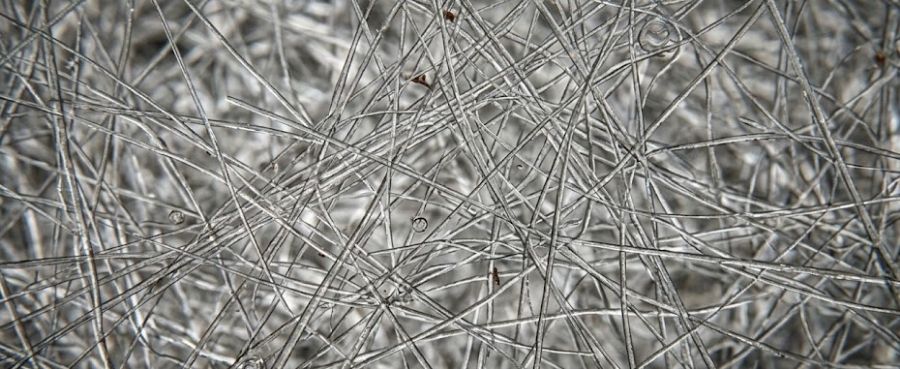
Fiberglass has a distinctive appearance that makes it easily distinguishable from natural textiles such as cotton or wool. Because it is a precisely engineered material, its physical structure perfectly reflects the industrial manufacturing process.
Long Smooth Fibers
Unlike natural animal hairs, which feature overlapping cuticles, or plant fibers, which twist and curl naturally, fiberglass strands are perfectly straight and entirely smooth. The industrial extrusion process creates continuous filaments that lack any natural crimp or irregular surface texture. When viewed through a powerful lens, they look exactly like perfectly uniform microscopic glass rods.
Transparent or Bright Strands
Since these fibers are made of actual melted glass, they interact with lighting uniquely. Under brightfield illumination, the strands appear highly transparent and often glow brightly along their outer edges. The light refracts heavily through the cylindrical shape, creating a distinct shiny or glassy appearance that organic dust materials simply do not possess.
Individual Fibers and Fiber Bundles
In commercial applications, manufacturers rarely rely on a single fragile strand of glass. You will typically see multiple individual fibers clustered tightly together to form thick bundles or heavy yarns. Depending on the specific sample you collect, you might observe these bundles loosely tangled together like a spiderweb or tightly glued side by side with a chemical binder.
How to Observe Fiberglass With a Microscope
Examining potentially irritating materials requires a careful and deliberate approach. Proper preparation ensures you capture a crisp image without contaminating your workspace or irritating your skin.
Prepare a Small Fiberglass Sample
Safety is absolutely paramount when handling glass filaments. Wear protective nitrile gloves and use fine precision tweezers to carefully pull a tiny pinch of the material. Place this small sample flat onto a clean glass slide and gently lay a coverslip over it. Using a tiny drop of distilled water or a standard mounting fluid helps secure the lightweight strands to the glass and significantly improves the overall optical clarity.
Start With Lower Magnification
Always begin your observation using your lowest power objective lens. Finding a microscopic transparent thread is incredibly difficult at extreme magnification. A low power setting provides a wide field of view, allowing you to easily locate the thick fiber bundles and center them perfectly in your light path before zooming in for a detailed inspection.

Adjust Lighting for Clear Fiber Images
Transparent glass fibers can easily wash out and turn entirely invisible if your bottom illumination is too bright. You must manipulate your light source to create visual contrast. Closing your iris diaphragm slightly or using angled top lighting creates tiny dark shadows along the edges of the transparent cylinders.
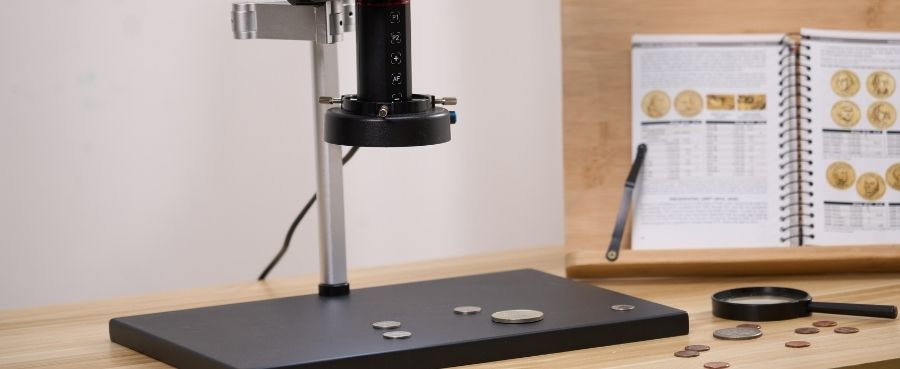
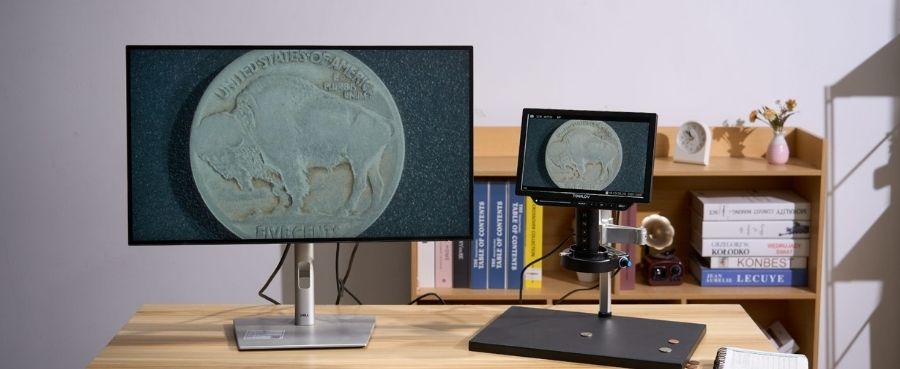
A device equipped to handle these specific observational steps, like Tomlov TRIL110 2K 3-Lens HDMI Digital Microscope, streamlines the entire workflow. Its three interchangeable lenses allow you to effortlessly jump from the low magnification needed to initially locate your prepared sample to the extreme high magnification required for detailed inspection, while its flexible dual side lights let you dial in the exact angled illumination necessary to make refractive glass strands pop boldly against the background.
What Features to Look For
Once you have your sample properly lit and focused, you need to verify its identity by checking for three specific physical characteristics that define extruded glass.
Check the Fiber Shape
Scan the entire visible length of the strand. You are looking for a perfectly linear and highly rigid shape. While glass fibers can bend gently in a wide arc, they will never feature the tight kinks, microscopic knots, or ribbon-like twists commonly found in cotton threads or synthetic clothing polyester.
Examine Surface and Thickness
Pay close attention to the outer diameter of the strand. Because fiberglass is manufactured through precision machinery, the thickness of a single filament will remain remarkably consistent from one end to the exact other. The surface will also remain completely uniform without any internal cellular structures or hollow medullas visible inside the core.
Look at Broken Ends
The broken ends of the fibers offer a massive diagnostic clue for identification. When natural fibers break, they fray into smaller microfibrils and look exactly like a frayed rope. When fiberglass breaks, it snaps cleanly. You will see sharp, jagged, or perfectly flat transverse breaks that look exactly like a shattered windowpane or a cleanly snapped rod.
How Different Fiberglass Samples May Look
The visual presentation of your sample will change drastically depending on the original commercial source of the material.
Fiberglass Insulation
Material pulled from residential attic insulation appears as a chaotic and disorganized web of loose fibers. You will frequently see small droplets or thick coatings of pink or yellow resin clinging directly to the glass strands. This colored chemical resin acts as a specialized binder to hold the fluffy batts together securely inside your walls.
Fiberglass Cloth
Samples taken from woven fiberglass tape or protective industrial cloth look highly organized under the lens. You will see distinct, dense bundles of filaments crossing over and under each other in a predictable geometric grid pattern. The individual glass strands within these bundles will be tightly packed and perfectly parallel to one another.
Fiberglass Reinforced Plastic
If you scrape a sample from a boat hull or an automotive body panel, you are looking at a hardened composite material. Under the lens, you will see the clear glass fibers completely encased in a solid, opaque matrix of hardened epoxy or polyester resin. The glass acts as the hidden internal skeleton for the surrounding block of plastic.

Final Thoughts
Identifying fiberglass under a microscope is a highly straightforward process once you understand its unique manufactured traits. By actively looking for perfectly smooth surfaces, consistent diameters, and sharp fractured ends, you can easily distinguish glass filaments from everyday dust and natural textiles. Preparing your slides safely and inspecting them with an HDMI digital microscope allows for precise lighting adjustments and high-contrast viewing, guaranteeing you capture crystal-clear evidence of this versatile industrial material.
Frequently Asked Questions
What Magnification Do You Need to See Fiberglass?
You can easily view the overall structure and layout of fiber bundles using a basic magnification of forty times power. To clearly see the smooth surface texture, uniform diameter, and sharp broken ends of an individual filament, you will need to increase your optical magnification to between one hundred and four hundred times power.
Is Fiberglass Basically Plastic?
No, the fibers themselves are entirely distinct from plastic. They are made from naturally occurring silica sand that has been melted down at extreme temperatures and mechanically extruded into microscopic threads. However, these pure glass threads are very frequently mixed with liquid plastic resins to create durable composite materials.
Can a Digital Microscope Detect Fiberglass?
Yes, modern digital microscopes are exceptionally good at detecting and displaying these specific materials. The high definition cameras capture the refractive qualities of the glass perfectly, and the large digital screens make it incredibly easy to scan large samples for hidden filaments without straining your eyes or neck.
Is Fiberglass Actually Glass?
It is absolutely real glass. The manufacturing process uses the exact same base mineral ingredients used to make drinking glasses and residential windowpanes. The only difference is that the molten glass is spun into incredibly thin microscopic filaments that become flexible, allowing them to be woven into fabrics or packed into fluffy insulation batts.
Is Fiberglass Harmful to Humans?
Direct physical contact with the fibers can cause severe mechanical irritation to the skin, eyes, and respiratory tract. The tiny glass ends act like microscopic needles that poke into the skin. While it is highly irritating and requires proper safety gear to handle safely, health organizations generally consider it much less hazardous than asbestos regarding long term respiratory disease.

Commenta
Nota che i commenti devono essere approvati prima di essere pubblicati.
Questo sito è protetto da hCaptcha e applica le Norme sulla privacy e i Termini di servizio di hCaptcha.