
Table of Contents
Choose an optical compound microscope for direct viewing of thin biological slides and high-power optical detail. Choose a digital microscope when screen viewing, recording, sharing and inspection of opaque surfaces are more important.
Neither category is universally better. The correct choice depends on the specimen, lighting, working distance, required resolution and whether you need to manipulate objects beneath the lens.
Digital vs Optical Microscope at a Glance
-
Viewing: digital uses a screen; optical normally uses an eyepiece.
-
Recording: built into many digital models; requires a camera or adapter on optical models.
-
Biological slides: compound optical microscopes are usually the safer choice.
-
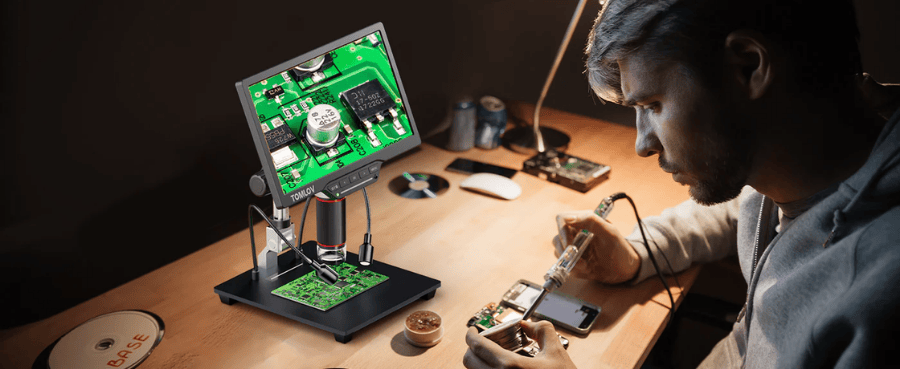
Coins and electronics: digital inspection microscopes are often more convenient.
-
Depth perception: stereo optical microscopes are strongest for manual manipulation.
-
Sharing: digital output is easier for classrooms and teams.
What Is an Optical Microscope?
An optical microscope uses visible light and lenses to form an image. The category includes compound microscopes for transparent slides and stereo microscopes for larger, opaque objects.
In a compound microscope, objectives and an eyepiece magnify the specimen. A stereo microscope uses two optical paths to provide depth perception at lower magnification. Read what a compound microscope is for a deeper explanation.

What Is a Digital Microscope?
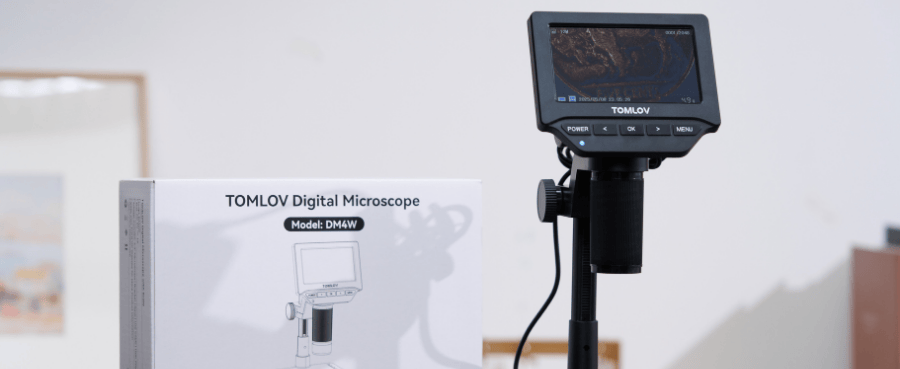
A digital microscope combines a lens with a camera sensor and displays the image on an LCD, computer, tablet or monitor. Some models are handheld; others use stable stands, autofocus, HDMI output or interchangeable lenses.
Digital microscope is a broad category. A surface inspection model is not equivalent to a digital compound microscope designed for transparent slides.
Image Quality and Resolution
Optical quality depends on the objective, numerical aperture, corrections, illumination and alignment. Digital image quality also depends on the lens, sensor, processing, compression and display.
A 4K screen cannot reveal detail that the lens and sensor did not capture. Likewise, a strong eyepiece cannot compensate for a weak objective.
Magnification
Traditional compound magnification is usually objective power multiplied by eyepiece power. Digital magnification may combine optical enlargement, sensor crop, display size and digital zoom, so advertised values are not always directly comparable.
Useful comparison requires real sample images, field of view, working distance and resolution—not only a maximum number.

Lighting and Specimen Type
Compound microscopes commonly transmit light through thin slides. Digital inspection microscopes normally reflect light from the top of coins, circuit boards and solid specimens.
Choose the light path before choosing resolution or screen size. A microscope with unsuitable illumination may fail even when its magnification sounds sufficient.
Working Distance and Hands-On Work

Digital inspection and stereo microscopes can provide room for soldering irons, tweezers and tools. High-power compound objectives operate close to the coverslip and are not intended for manipulating large components.
Comfort, Recording and Collaboration
A screen allows multiple people to view the same image and makes photos, video and documentation easier. It may also reduce neck strain, although screen placement and latency matter.
An eyepiece provides a direct view without video delay. For delicate manipulation, a stereo optical microscope may offer more natural depth than a single-camera screen image.
Which One Is Best for Each Task?
-
Cells and prepared slides: compound optical microscope or digital compound system.
-
Coins and stamps: digital inspection microscope.
-
PCB inspection and soldering: long-working-distance digital or stereo microscope.
-
Insects and rocks: stereo microscope for depth; digital model for recording.
-
Classroom demonstrations: digital output or optical microscope with camera.
-
Professional measurements: calibrated system matched to the required standard.
What to Check Before Buying
-
Specimen type and illumination direction.
-
Optical resolution and real sample images.
-
Working distance and stand stability.
-
Field of view at the working magnification.
-
Fine focus or autofocus behavior.
-
Video latency and output resolution.
-
Software and operating-system compatibility.
Use our digital microscope buying checklist before comparing individual models.
Frequently Asked Questions
Is a digital microscope better than an optical microscope?
It is better for screen viewing, documentation and many surface-inspection tasks. An optical compound or stereo microscope may be better for biological slides, direct optical detail or depth perception.
Can a digital microscope replace an optical microscope?
Not in every application. Some digital compound systems can perform similar imaging tasks, but a basic USB surface microscope cannot replace a laboratory compound microscope.
Which is easier for beginners?
A digital screen is often easier for sharing and initial focusing. However, the correct illumination and specimen compatibility remain more important than the viewing method.
Final Answer
Choose according to the specimen and task. Optical compound microscopes are strong for transparent slides; stereo microscopes provide depth and tool control; digital microscopes excel at screen-based inspection, recording and collaboration. If you are still undecided, read whether digital microscopes are worth it for a use-case-based verdict.


发表评论
所有评论在发布前都会经过审核。
此站点受 hCaptcha 保护,并且 hCaptcha 隐私政策和服务条款适用。