
Table of Contents
Are you confused by the wide variety of microscopes and unsure which one is right for you? With differences in illumination sources, lens systems, and their interaction with samples, choosing the right microscope can be challenging.
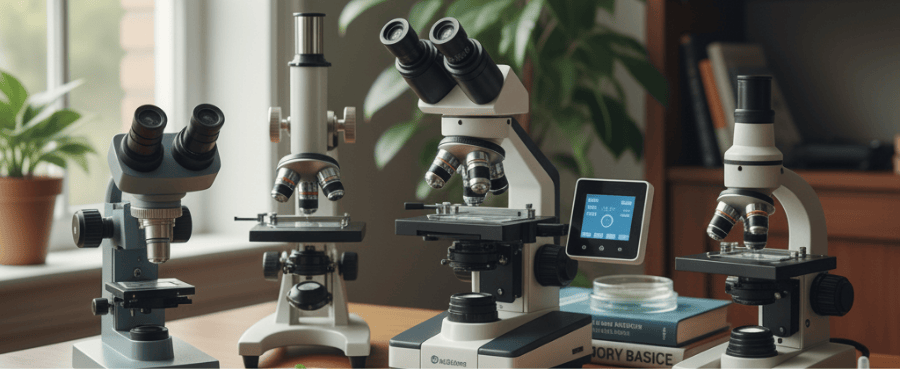
This article will help you understand the key distinctions between various microscope types, ranging from high-magnification electron microscopes to 3D stereo microscopes and fluorescence microscopes that highlight specific molecules.
By the end, you'll have a clear picture of what each microscope offers and how to choose the best one for your needs.
Main Types of Microscopes
|
Type |
Magnification Power |
Best For |
Key Features |
|
Stereo Microscope |
Low (10x-100x) |
3D viewing of large objects |
Provides depth perception, excellent for dissection and inspection |
|
Compound Microscope |
High (40x-1000x) |
Cellular biology, pathology |
Ideal for thin samples and biological slides, high magnification |
|
Inverted Microscope |
Moderate (40x-400x) |
Cell culture, tissue analysis |
Allows viewing of samples from the bottom of culture plates |
|
Metallurgical Microscope |
High (up to 1000x) |
Material science, metal analysis |
Specialized for analyzing metal surfaces, embedded materials |
|
Digital Microscope |
Variable |
Versatile, educational use |
Offers digital output for easy viewing and sharing, often portable |

Understanding Stereo Microscopes
Overview and Key Features
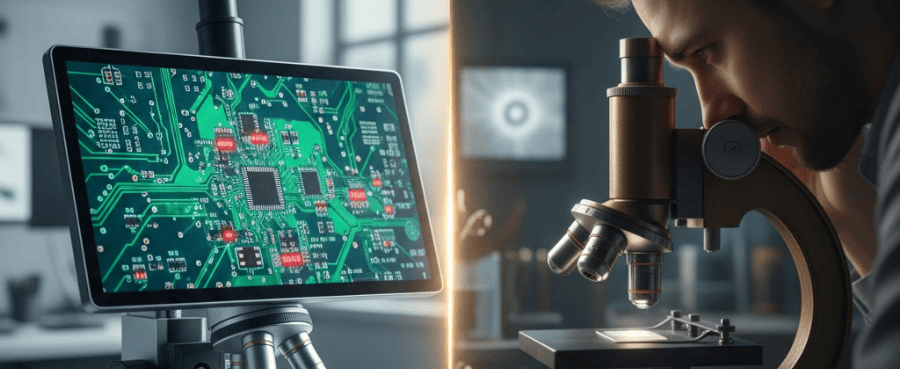
Stereo microscopes are designed for viewing larger objects in 3D, making them ideal for activities such as dissection, assembly, or inspection of larger objects, including circuit boards, coins, or plants. They offer lower magnification (10x-100x) but allow for depth perception, which is essential for tasks where spatial awareness is critical.
When to Choose a Stereo Microscope
-
You need to inspect objects with depth, such as insects or mechanical parts.
-
You require a microscope for educational purposes or as a beginner's model.
-
You want a user-friendly microscope for general-purpose use in labs or workshops.
Tips for Selecting a Stereo Microscope
-
Magnification Range: Look for models with adjustable magnification for better flexibility.
- Lighting: Ensure the microscope has built-in lighting, especially for small or reflective objects.
Related Reading: Digital vs. Optical Microscopes: An In-Depth Comparison

Exploring Compound Microscopes
Overview and Key Features
Compound microscopes are typically used for examining thin, transparent specimens. With magnification ranging from 40x to 1000x, they are perfect for viewing cellular structures, bacteria, and tissues. This type of microscope uses light passing through the specimen to provide detailed images of the internal structure.
When to Choose a Compound Microscope
-
You need high magnification to examine thin, translucent biological specimens.
-
You're studying cells, bacteria, or other microscopic organisms.
-
You require a tool for laboratory or educational work.
Tips for Selecting a Compound Microscope
-
Objective Lenses: Select a model with high-quality optics for sharper, more detailed images.
-
LED Lighting: Opt for an LED light source for better brightness and lower energy consumption.

Inverted Microscopes: Ideal for Cell Culture
Overview and Key Features
Inverted microscopes are designed to observe specimens in petri dishes or culture plates from below, making them ideal for cell culture analysis and the observation of live tissue. The sample is placed at the bottom, allowing for uninterrupted viewing of living cells.
When to Choose an Inverted Microscope
-
You need to view living cells in culture without disturbing the sample.
-
You're working with petri dishes or large culture plates.
-
You need to observe real-time cellular growth or behavior in order to do so.
Tips for Selecting an Inverted Microscope
-
Stage Size: Opt for microscopes with a large, stable stage to accommodate petri dishes effectively.
-
Numerical Aperture: Higher numerical aperture objectives provide better resolution, so choose accordingly.

Metallurgical Microscopes for Material Analysis
Overview and Key Features
Metallurgical microscopes are specialized for viewing metal surfaces and materials at high magnification. These microscopes are equipped with features such as reflected light sources, allowing for detailed imaging of metal surfaces, embedded materials, and grain structures.
When to Choose a Metallurgical Microscope
-
You need to examine the structure of materials, such as metals, alloys, and composites.
-
You're involved in material science, metallurgy, or quality control in manufacturing.
Tips for Selecting a Metallurgical Microscope
-
Polarizing Filter: Choose a model with a polarizing filter for better material analysis.
-
Reflective and Transmitted Light: Make sure it offers both options for versatile viewing.

Digital Microscopes: Versatile and User-Friendly
Overview and Key Features
Digital microscopes combine traditional microscopy with modern technology, offering digital output for easy sharing and storage. These microscopes are ideal for educational purposes, inspection, and versatile hobby use. Many digital microscopes are portable and user-friendly, making them a good choice for beginners.
When to Choose a Digital Microscope
-
You need a microscope that provides digital output for easy documentation or sharing.
-
You want a portable, easy-to-use model for general or educational purposes.
-
You need both low and moderate magnification flexibility.
Tips for Selecting a Digital Microscope
- Resolution: Opt for a microscope equipped with a high-resolution camera for sharp, clear images.
Ensure the microscope, such as the Tomlov digital microscope, has a wide range of magnification for different tasks, and features a high-resolution camera for sharp, clear images. This will enhance your ability to examine objects in fine detail and share results easily
- Adjustable Magnification: Ensure it has a wide range of magnification for different tasks.
Related Reading: How to Choose Your First Digital Microscope
Step-by-Step Guide to Choosing the Right Microscope
- Determine Your Primary Use Case
What do you want to examine? Biological samples, metal surfaces, or larger objects? The microscope type should align with your primary task.
- Consider Magnification Needs
High magnification is essential for biological studies (compound microscopes), while lower magnification is sufficient for general inspection (stereo microscopes).
- Budget
Microscopes can range from affordable models to high-end research tools. Consider your budget and whether you need specialized features or a basic model.
- Portability and Storage
If portability is a concern, digital microscopes are a great option. If stability is more important, look at compound or inverted microscopes.
- Evaluate Features and Accessories
Look for features such as adjustable lighting, high-quality optics, and ease of use. Consider what accessories (e.g., camera attachments, special lenses) may enhance your work.
FAQ Section
1. What is the difference between a compound and a stereo microscope?
A compound microscope offers high magnification for small specimens, while a stereo microscope provides lower magnification for 3D views of larger objects.
2. Can I use a digital microscope for professional research?
Yes, digital microscopes are increasingly used in research, especially for applications requiring image documentation and sharing.
3. What microscope is best for viewing living cells?
An inverted microscope is ideal for examining living cells in culture dishes without disturbing them.
4. How much does a high-quality microscope cost?
Prices vary widely depending on the type and features. Stereo and digital microscopes can range from $100 to $1,000, while compound and inverted microscopes range from $500 to $5,000.
5. Do I need a microscope with high magnification for educational use?
For most educational purposes, a stereo or low-magnification compound microscope is sufficient. High magnification is necessary for detailed biological research.
In Conclusion
By understanding the key differences between microscope types—such as stereo, compound, inverted, metallurgical, and digital microscopes—you can make a more informed decision based on your specific needs. Whether you're a student, researcher, or hobbyist, each type of microscope offers unique features and benefits that align with particular tasks, such as biological studies, material analysis, or general inspection.
By considering factors like magnification power, sample type, ease of use, and your budget, you can narrow down the best choice. Additionally, considering maintenance needs, portability, and potential for future advancements can ensure you make a well-rounded and future-proof investment. With the guidance provided in this article, you’re now equipped to select a microscope that meets your needs and will support your work effectively for years to come.


Hinterlasse einen Kommentar
Alle Kommentare werden vor der Veröffentlichung geprüft.
Diese Website ist durch hCaptcha geschützt und es gelten die allgemeinen Geschäftsbedingungen und Datenschutzbestimmungen von hCaptcha.