
Table of Contents
A microscope is a precision instrument, and most of the damage that happens to one doesn't happen during use. It happens during storage. Dust settles on the lenses, moisture creeps into the optics, someone sets something on top of it, or it gets bumped off a shelf. None of that is dramatic, but the cumulative effect is a microscope that gives you blurry images and costs real money to fix or replace.
The good news is that storing a microscope correctly isn't complicated. It mostly comes down to a few consistent habits. This guide covers exactly what to do, whether you have a basic student scope, a professional compound microscope, or a digital microscope used for work or hobby projects.
Why Proper Storage Matters More Than Most People Think
Dust Is the Biggest Everyday Threat
Dust sounds harmless, but on optical glass it causes real problems. Fine particles settle onto lens surfaces and scatter light, which reduces image clarity and contrast. The more dust that accumulates, the harder it becomes to clean without risking a scratch. Some dust also carries moisture or mild acidity that can etch glass over time if left in contact long enough.
Humidity Damage Is Slow but Serious
Humidity is a quieter threat. In environments with consistently high moisture, fungal growth can develop on lens coatings. Once fungal etching sets in on a lens, it's not something you can clean off. The coating is permanently damaged. This is especially common in microscopes stored in basements, garages, or anywhere with poor air circulation.
Physical Damage Happens in Storage Too
Microscopes get bumped, knocked over, or have things stacked on top of them more often during storage than during actual use. Objective lenses are particularly vulnerable. Even a minor impact can misalign internal lens elements in a way that isn't obvious until you try to use the scope and notice the image is off.

How to Prepare Your Microscope Before Storing It
Clean It Before You Put It Away
Never store a microscope dirty. Any oil, fingerprints, or debris left on the lenses will sit there and become harder to remove later. Before storing, use lens paper or a microfiber cloth designed for optics to gently wipe down the eyepiece and objective lenses. For stubborn residue, a small amount of lens cleaning solution works well. Avoid paper towels, tissues, or anything with a rough texture that can scratch the glass.
Wipe down the body and stage too. Any sample residue, immersion oil, or moisture left on the stage can corrode metal surfaces or get transferred to the lenses later.
Remove Immersion Oil Completely
If you've been using a 100x oil immersion objective, make sure you clean off all the immersion oil before storage. Oil that sits on the lens or stage can harden over time and become difficult to remove. It can also wick into lens seals and cause fogging inside the objective. Use lens paper and a small amount of lens cleaner to get it off completely.
Set the Objectives to the Lowest Power Position
Before storing, rotate the nosepiece so the lowest-power objective (usually 4x) is in the down position. This reduces the risk of the higher-power objectives getting bumped or scratched during handling. It also puts less mechanical stress on the nosepiece over time.
Lower the Stage and Rack Down the Body Tube
Bring the stage down to its lowest position and lower the body tube if your microscope allows it. This makes the overall profile of the microscope more compact and less top-heavy, which reduces the chance of it tipping if it gets nudged.
Related Reading: How to Clean a Microscope Lens

Storage Location: What to Look For
Temperature and Humidity
The ideal storage environment for a microscope is cool, dry, and stable. Room temperature is fine. What you want to avoid is anywhere that gets hot and cold repeatedly (like a car, a garage, or a windowsill with direct sun) or anywhere with high humidity. Repeated temperature swings cause condensation to form on optical surfaces, which accelerates both fogging and fungal growth.
A climate-controlled room or a temperature-stable cabinet is the best option for most people. If you're in a humid climate, adding a small silica gel desiccant packet to your storage case or cabinet helps absorb excess moisture. Replace or recharge the desiccant every few months.
Away From Direct Sunlight
UV exposure from direct sunlight can degrade lens coatings over time. It also heats up the microscope unevenly, which isn't good for precision optics. Store the microscope away from windows or anywhere that gets direct sun during the day.
A Stable, Vibration-Free Surface
Microscopes don't do well with vibration over time. Constant low-level vibration (from machinery, foot traffic, or nearby appliances) can gradually loosen fittings and affect optical alignment. A solid shelf in a low-traffic area is better than a countertop near an HVAC unit or a shelf above a washer and dryer.
Covering and Enclosing Your Microscope
Use the Dust Cover Every Time
Most microscopes come with a plastic or fabric dust cover. Use it every single time the microscope isn't in active use. It's a simple step that makes a significant difference in how quickly dust accumulates on the lenses and stage.
If you've lost the original cover, a clean pillowcase or a purpose-made dust cover from the microscope manufacturer works just as well. The goal is simply to keep airborne dust from settling directly on the instrument.
Hard Cases for Transport and Long-Term Storage
If you need to store the microscope for an extended period, or if you move it between locations regularly, a hard-sided carrying case is worth having. A good case provides padding to absorb impacts, a latching closure to keep dust out, and often foam cutouts that hold the microscope securely so it can't shift around inside.
This applies to digital microscopes as well. Many digital models are compact and designed to be portable, but that portability means they're also more likely to get tossed in a bag or drawer without much protection. A small hard case or a dedicated storage box keeps the lens, camera, and cable organized and protected.
Storing Different Types of Microscopes
Compound Microscopes
Compound microscopes are the most common type and the most sensitive to storage conditions because of their multiple optical elements. All the steps above apply directly. The biggest practical priorities are keeping the dust cover on, controlling humidity, and making sure the objectives are protected.
Stereo Microscopes
Stereo microscopes are a bit more forgiving because they typically have lower magnification and fewer internal optical elements. That said, the same rules apply: cover it, keep it dry, clean it before storage, and store it somewhere stable.
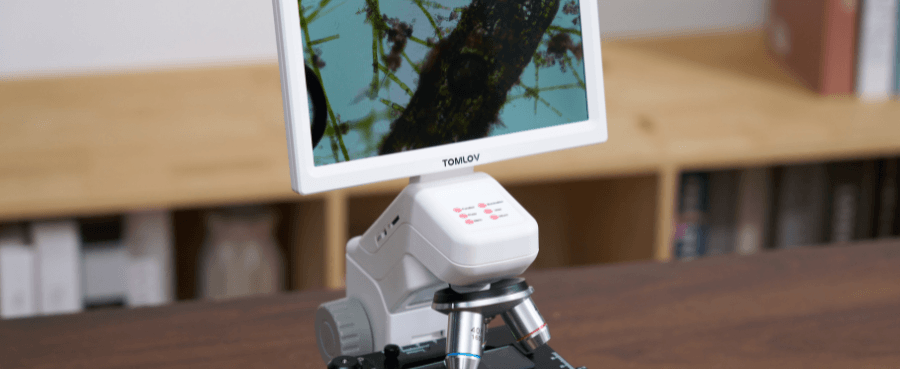
Digital Microscopes
A digital microscope has the same basic storage needs as any optical instrument, but there are a few additional things to keep in mind. First, the camera sensor can be damaged by prolonged direct exposure to strong light, so lens cap protection matters even in storage. Second, cables and connectors should be coiled loosely and stored in a way that doesn't put stress on the plug ends. Kinked or repeatedly bent cables fail faster than people expect. Third, if your digital microscope has any rechargeable components, check the manufacturer's guidance on battery storage. Leaving a lithium battery fully drained for extended periods can reduce its long-term capacity.
Quick Storage Checklist
Before you put your microscope away, run through these steps:
- Clean all lens surfaces with appropriate lens paper or cloth
- Remove all immersion oil if applicable
- Rotate nosepiece to lowest power objective
- Lower the stage and body tube
- Replace the dust cover
- Confirm the storage location is dry, stable, and away from direct sunlight
- Add or check silica gel desiccant if you're in a humid environment
It takes about five minutes and extends the useful life of the microscope significantly.
Final Thoughts
Microscope storage doesn't require anything complicated or expensive. It requires a dust cover, a reasonable environment, a quick cleaning routine, and a little attention to where you're putting the thing. Whether you're storing a student compound scope, a professional stereo microscope, or a digital microscope used for work or inspection, the fundamentals are the same: keep it clean, keep it dry, keep it covered, and keep it somewhere it won't get bumped.
Do those things consistently and the optics will stay sharp for years.

Leave a comment
All comments are moderated before being published.
This site is protected by hCaptcha and the hCaptcha Privacy Policy and Terms of Service apply.