

Table of Contents
With so many options—different magnifications, viewing angles, and price ranges—it’s easy to feel stuck. This guide simplifies the choice by comparing cost, comfort, and use cases, such as casual collecting versus detailed grading. You’ll learn why 20X is often enough, when a 90° angle is cost-effective, and why a 45° stereo scope is worth the upgrade. By the end, you’ll know exactly which microscope fits your budget and collecting style.
Main Types of Microscopes for Coins
|
Microscope Type |
Best For |
Pros |
Cons |
|
USB Digital Microscope |
Beginners, casual viewing, sharing |
Affordable, easy to use, connects to PC/phone, captures images/video |
Lower image quality, limited working distance, less "3D" feel |
|
Stereo Microscope |
Serious collectors, grading |
Accurate 3D view, superior optics, comfortable, great working distance |
Higher cost, usually no built-in capture, larger footprint |
|
Dedicated LCD Microscope |
Mid-range users, on-screen viewing |
Built-in screen, good optics, self-contained, decent working distance |
Limited screen size, lacks full “3D” depth |

Choosing the Right Magnification Power
When it comes to selecting a coin microscope, more power isn’t always better.
The goal is to see subtle details without losing the overall view of the coin.
Magnification vs Best Use
|
Magnification |
Best Use Case |
|
10x–20x |
Overview, checking fields for scratches, mintmarks |
|
30x–40x |
Detailed error ID (doubled dies, RPMs), wear assessment |
|
50x–60x |
Wonderful details like die cracks or faint doubling |
Selection Tips:
-
Match your goals: major errors = 20x–40x, grading = up to 60x.
-
Prefer zoom ranges (e.g., 7x–45x) over fixed magnification.
- Always prioritize clarity over extreme numbers (ignore “1000x” digital claims).
Related Reading: Exploring Coins with Tomlov Digital Microscopes
Ensuring Proper Lighting
Lighting is critical because coins are reflective. Poor light can hide details, while good light reveals texture and relief.
Best Options:
-
Ring Lights: Even illumination, ideal for general viewing.
-
Gooseneck/Side Lights: Angled lighting to highlight relief and subtle errors.
-
Dome Illumination: Soft, shadow-free lighting, excellent for shiny surfaces.
Tip: Adjustable brightness (5000K–6000K natural white) is best. If your scope has poor lighting, consider adding external LED lights.
Digital vs Optical Microscopes
This is often the key decision point, and you can dive deeper in this guide on digital vs optical microscopes to better understand which option fits your collecting style.
-
Stereo Microscopes: Look through eyepieces for an accurate 3D view and top optical clarity. Best for long sessions and grading.
-
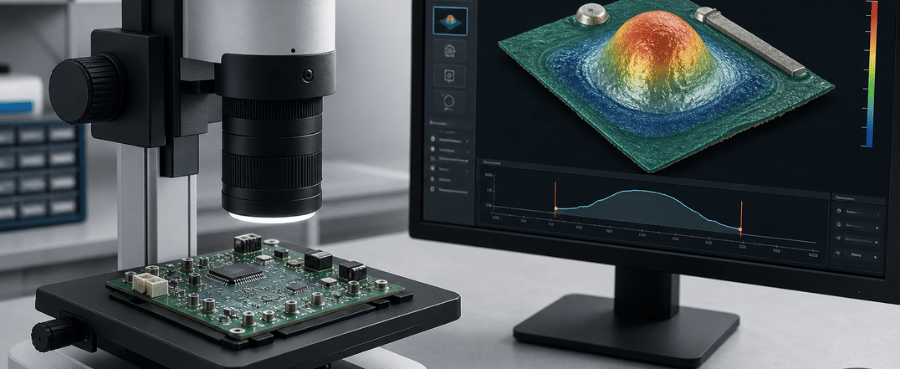
Digital Microscopes (USB/LCD): View on a screen, offering comfort, sharing, and photo/video capturing capabilities, but may lack depth of field.
Selection Tips:
-
Prefer digital if you want easy image/video capture.
-
Choose stereo if you prioritize optical clarity and 3D detail.
-
Check working distance: Stereo scopes usually allow more space to move coins easily.
Ergonomics and Comfort
Long sessions require a setup that won’t strain your eyes or neck.
-
Stable stand: A heavy base or boom arm ensures smooth movement.
-
Focus mechanism: Smooth, precise knobs are essential.
-
Eyepieces (stereo scopes): Adjustable for comfort.
-
Menus & buttons (digital): Should be intuitive.
Tip: Watch video reviews before buying to assess real-world ease of use.
Decision Guide
Budget
-
Under $100 → USB Digital Microscope (suitable for beginners).
-
$100–$300 → LCD Digital Microscope (better image quality, built-in screen).
-
$300–$1000+ → Stereo Microscope (best optics, ideal for serious collectors).
Primary Use
-
Just want to explore & share online → Digital Microscope.
-
Severe grading, error attribution → Stereo Microscope.
-
Balanced, self-contained solution → LCD Microscope.
Other Checks
-
Room for setup (stereo scopes are bigger).
-
Reviews and video demos for rhonestfeedback.
-
Warranty & brand reputation.

FAQs
Q1: What’s the most significant difference between a USB digital microscope and a stereo microscope?
A1: USB microscopes display on a screen and are great for sharing, while stereo scopes provide an accurate 3D optical view for grading accuracy.
Q2: Do I need 1000x magnification?
A2: No. For coins, a magnification of 10x–60x is sufficient. Higher “digital” magnifications just enlarge pixels without revealing more detail.
Q3: How important is lighting?
A3: Critical. Good lighting reduces glare and highlights textures, making errors visible.
Q4: Can I use a biological microscope for coins?
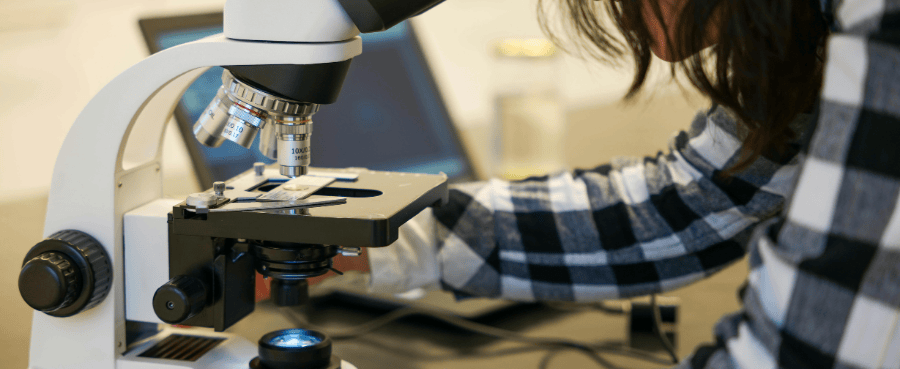
A4: Not effectively. They’re designed for thin, transparent samples, not solid coins.
Q5: What’s a good working distance?
A5: At least 5–10 cm. Stereo microscopes usually provide the best space for moving and adjusting coins.
In Conclusion
Choosing the right coin microscope depends on your goals, comfort, and budget. Beginners can start with an affordable USB digital microscope for exploring details and sharing images, while mid-range LCD microscopes provide a convenient self-contained solution with good optics.
For serious collectors and graders, stereo microscopes remain the gold standard, offering superior precision, depth, and long-term comfort. Tomlov’s Coin Inspection Collection complements these needs with high-quality digital microscopes that deliver clear imaging, adjustable magnification, and built-in display and recording features—making them a reliable choice for both hobbyists and numismatists who want to see every fine detail of their coins.

Leave a comment
All comments are moderated before being published.
This site is protected by hCaptcha and the hCaptcha Privacy Policy and Terms of Service apply.