
Table of Contents
To the naked eye, sand often looks like nothing more than a uniform expanse of brown or white powder. However, placing a simple pinch of beach dirt under a microscope reveals a breathtaking world of miniature jewels, ancient fossils, and shattered volcanic glass. This guide will help you understand exactly what you are seeing when you magnify sand, why grains from different beaches look unique, and how to set up your equipment to explore this hidden geological universe.
What Sand Looks Like Under a Microscope
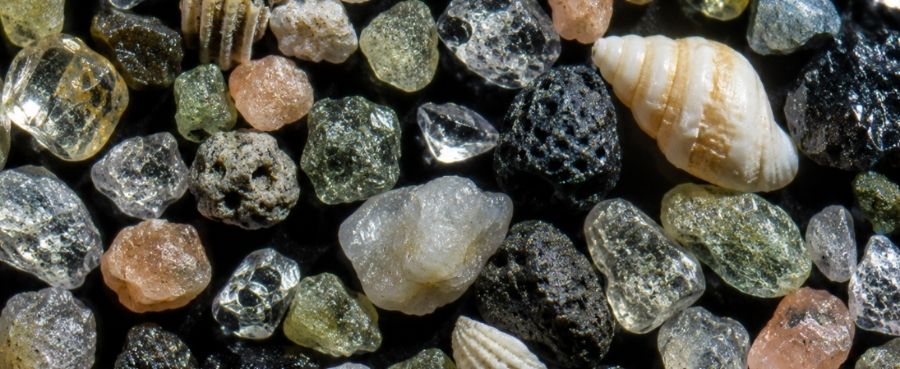
When you look at sand through a highly magnified lens, the boring brown color vanishes. You immediately realize that you are looking at thousands of distinct, colorful objects.
Different Colors and Transparency
Under bright light, sand looks like a collection of shattered stained glass. Quartz grains often appear completely transparent or slightly milky. Feldspar adds splashes of tan, pink, or pale orange. You might also spot deep black grains of magnetite or brilliant green flecks of olivine. Every single pinch offers a unique color palette.
Grain Shapes and Surface Texture
Sand grains are highly three-dimensional and feature diverse physical topographies. Some grains look like perfectly polished spheres, while others resemble jagged, freshly broken shards of glass. If you look closely at the surface of an individual grain, you might see a smooth, glossy finish that reflects your light source perfectly, or a rough, heavily pitted surface that looks like frosted glass.
Minerals and Natural Fragments
Sand is not strictly composed of rocks. Depending on where you collected your sample, you will likely see biological fragments mixed in with the minerals. Under the lens, you can easily identify tiny spiral seashells, the porous white structures of broken coral, sharp sea urchin spines, and even microscopic fragments of bone.
Why Sand Grains Look Different
The incredible variety of shapes and colors is not random. Every grain of sand holds a physical record of its creation and its journey across the planet.
Mineral Composition
The visual appearance of a sand grain starts with its source material. Inland sand is typically created when massive mountains slowly erode over millions of years. If a mountain is made of granite, the resulting sand will be heavily packed with clear quartz and pink feldspar. If the source rock is a dark basalt cliff, the sand will appear dark and opaque.
Weathering and Transport
The physical shape of a grain tells you exactly how it traveled. Sand carried by rushing river water constantly tumbles against other rocks, slowly grinding down its sharp edges into a polished, rounded shape. Conversely, sand blown across a dry desert by the wind violently crashes into other grains, creating thousands of microscopic chips that give the surface a distinct frosted appearance.
Sand From Different Locations
Local geography completely dictates what accumulates on the ground. A tropical island lacking large mountains will not have mineral-rich sand; instead, its beaches will be composed entirely of crushed biological shells. A beach located near a highly active fault line or volcano will feature sharp, freshly shattered tectonic rock.

How to Observe Sand Under a Microscope
Because sand grains are thick and opaque, they require a slightly different setup than standard biological slides. Proper preparation is the key to seeing their incredible textures.
Prepare a Small Sand Sample
Do not pile a thick mound of sand under your lens. Instead, take a clean, dry piece of dark construction paper or a plain glass slide. Use tweezers or a toothpick to scatter just a few dozen grains across the surface. Keeping the grains separated prevents them from casting shadows over each other and allows you to isolate individual shapes.
Start With Low Magnification
Sand is relatively large in the microscopic world. Always begin your observation between 20x and 40x magnification. This low power provides a wide field of view, allowing you to see the beautiful variety of colors and shapes all at once. Once you find a particularly interesting shell or crystal, you can safely increase the magnification for a closer look.
Adjust Focus and Lighting
Unlike thin, transparent plant cells, light cannot pass directly through a thick rock. You must use top lighting (incident illumination) to shine light down onto the sand. Angle your flexible side lights to cast microscopic shadows across the surface of the grains. These shadows highlight the pits, scratches, and ridges that give each grain its character.
Capture Clear Microscope Images
Photographing three-dimensional objects requires absolute stability and precise movement. Trying to manually push a piece of paper around to center a grain often causes frustrating blurriness. Utilizing a setup with a mechanical stage greatly improves this process. For example, Tomlov DM301 Digital Microscope Camera with 7" Screen allows you to smoothly glide your sand sample precisely into the frame using physical control knobs. Its built-in screen and dedicated camera let you document the vibrant colors and sharp textures perfectly without constantly battling hand tremors.

Comparing Different Types of Sand
Collecting and comparing sand from different vacations or regions is a popular hobby known as arenophily. Here is what you can expect to see from different global environments.
Beach Sand
Standard coastal beach sand is usually a highly diverse mixture of durable minerals like quartz, mixed with crushed biological matter. Because it is constantly churned by ocean waves, the grains are typically well-rounded and highly polished.
Desert Sand
Sand from deep within a desert looks remarkably uniform. Because the wind blows the lightest grains around constantly, the grains are usually all the exact same size. They are heavily rounded and feature a severely frosted, dull surface texture due to endless wind abrasion.
Volcanic Sand
Sourced from areas like Hawaii or Iceland, volcanic sand is striking. It lacks biological shells entirely. Instead, you will see highly angular, jagged shards of jet-black obsidian, dark gray basalt, and frequently, bright green crystals of olivine.
Coral and Shell Sand
Tropical beaches yield the most visually spectacular samples. Under the lens, this sand is rarely rock. It is a stunning collection of tiny, perfect pink and white shells, star-shaped foraminifera, and porous fragments of ancient coral reefs.
What Sand Can Tell You Under a Microscope
Geologists do not just look at sand because it is beautiful; they study it because it is an incredibly accurate environmental tracking tool.
Understanding Grain Composition
By identifying the specific ratio of quartz, feldspar, and magnetic minerals, geologists can trace a handful of sand back to its exact parent mountain range, even if that mountain is hundreds of miles away.
Discovering Clues About Sand Origin
The shape of the grain acts as a physical timeline. If you look at sand and see very sharp, jagged edges, you know that the rock was recently broken and has not traveled very far from its source. If the grain is a perfect, smooth sphere, you know it has been tumbling in a river or ocean for thousands of years.
Comparing Samples From Different Places
Every beach has a unique microscopic fingerprint. Forensic scientists actually use microscopic sand analysis to link objects or suspects to specific geographical locations by comparing the exact mineral ratios found on shoes or tires to regional databases.
Final Thoughts
Viewing sand under a digital microscope transforms a mundane scoop of dirt into a dazzling geological exhibit. By paying attention to the colors, shapes, and surface textures, you can read the physical history of the earth right on your viewing stage. Whether you are hunting for tiny tropical shells or examining jagged volcanic glass, exploring the microscopic world of sand is an endless and fascinating journey.
FAQs
Is sand just microscopic rock?
While inland sand is mostly composed of broken rocks and minerals, coastal and tropical sand contains a massive amount of biological material. Today, you will also frequently spot human-made materials like microscopic glass spheres and colorful microplastics mixed into beach samples.
What is real sand made of?
Scientifically, the word "sand" does not describe a specific material; it describes a specific size. Geologists classify any loose particle that measures between 0.0625 millimeters and 2 millimeters in diameter as sand, regardless of whether it is made of quartz, coral, or volcanic ash.
Can Sand Damage a Microscope Lens?
Yes, minerals like quartz are physically harder than optical glass. If you accidentally bring your objective lens down too far and crush the sand, the sharp grains will permanently scratch your expensive lens. Always maintain a safe working distance.
How Should Sand Samples Be Stored for Later Comparison?
Store your dried samples in tiny glass or clear plastic vials. Always label the vial immediately with the exact geographic location, the date collected, and any relevant environmental notes. Keeping them organized makes future microscopic comparisons much easier.


Leave a comment
All comments are moderated before being published.
This site is protected by hCaptcha and the hCaptcha Privacy Policy and Terms of Service apply.