
Table of Contents
Choosing between a stereo and digital microscope depends on your workflow. Stereo models provide true depth perception for precise, hands-on tasks, while digital versions offer superior ergonomics and easy image capture through screen viewing. This guide compares their strengths to help you choose.
Stereo Microscope vs Digital Microscope Comparison
Before diving into the detailed mechanics of each device, it is helpful to look at a broad overview. The table below outlines the primary functional differences between the two systems.
|
Feature |
Stereo Microscope |
Digital Microscope |
|
Viewing Method |
Look through two optical eyepieces |
Look at a digital monitor |
|
Depth Perception |
Excellent true three dimensional view |
Flat two dimensional representation |
|
Image Capture |
Requires special adapters and cameras |
Built in instant photo and video capture |
|
Ergonomics |
Can cause neck and eye strain over time |
Excellent posture and eye comfort |
|
Setup Time |
Requires individual eye adjustments |
Simply turn it on and look at the screen |
What Is a Stereo Microscope?
A stereo microscope is a traditional optical instrument that relies entirely on physical glass lenses and light to magnify an object. It is a staple in professional laboratories and repair shops.
How It Works
Unlike a standard compound microscope that uses a single optical pathway, a stereo microscope uses two entirely separate light paths. Each eyepiece has its own dedicated objective lens angled slightly inward toward the specimen. When you look through the eyepieces, your left eye and right eye receive slightly different viewing angles of the same object. Your brain combines these two different angles to create a single image.
What It Is Best For
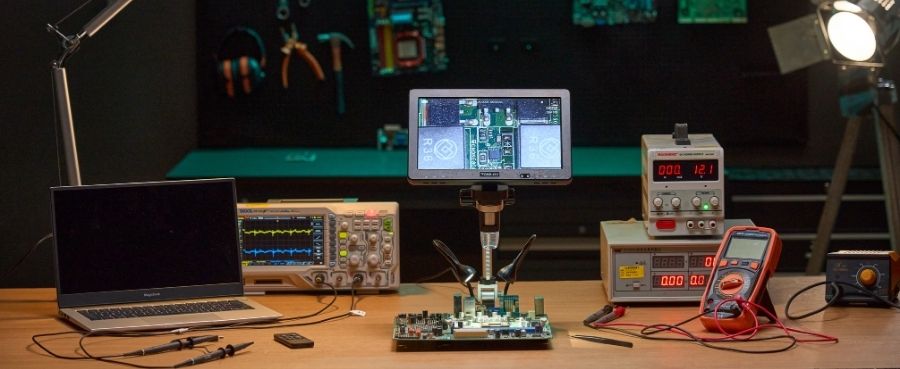
Because of how it operates, this tool is exceptional for tasks requiring precise physical manipulation. Professionals use them constantly for micro soldering delicate circuit boards, dissecting biological specimens, or setting tiny diamonds into jewelry. Whenever you need to use hand tools under magnification, this is usually the go to instrument.
Main Strength
The absolute greatest advantage of a stereo microscope is true depth perception. Because your brain processes two separate optical paths, you can easily judge the exact distance between your soldering iron and the circuit board. You can see the actual physical depth of a crack in a gemstone rather than just a flat image of it.
What Is a Digital Microscope?
How It Works
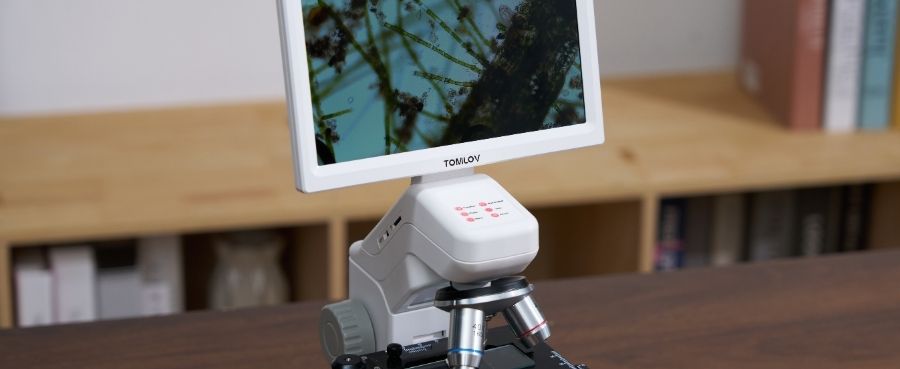
This modern device uses a standard optical lens to gather light, but instead of sending that light to an eyepiece, it focuses the light directly onto a digital camera sensor. The internal software processes this optical data and immediately displays a highly magnified image on a connected LCD monitor or a computer screen.
What It Is Best For
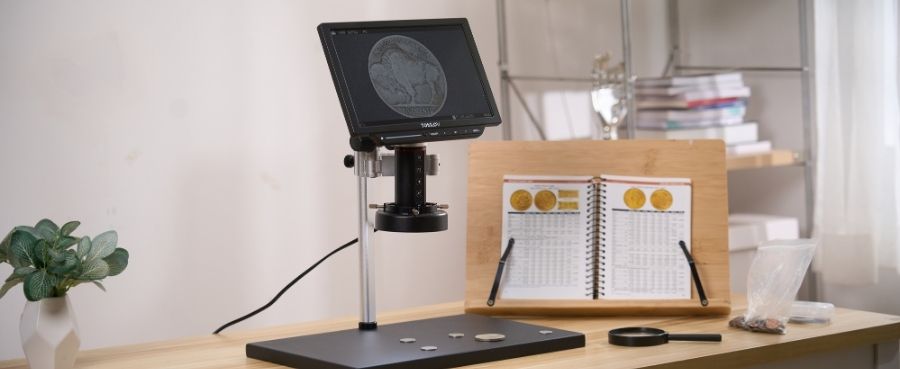
Digital systems excel at inspection, documentation, and collaboration. They are perfect for stamp and coin collectors who need to verify specific mint errors. They are also ideal for quality control inspectors who need to show a defective part to a manager, or teachers who want to display a specimen to an entire classroom simultaneously.
Main Strength
The primary strength of a digital model is pure ergonomic comfort combined with effortless image capture. You do not have to hunch over the device or squint through tiny lenses. You can sit comfortably in your chair, look straight ahead at a bright monitor, and click a single button to record a high-definition video of your work.

Key Differences
Understanding how these tools differ in daily use will guide you toward the right choice for your specific workbench.
Viewing Experience
The viewing experience is fundamentally different. An optical stereo model provides an instantaneous, lag-free view of your subject through glass. A digital model introduces a screen. While modern digital screens are incredibly fast, you are still looking at a processed video feed rather than the raw physical object.
Depth Perception
As mentioned earlier, stereo models provide true spatial awareness. Digital models flatten the subject into a two-dimensional image on a screen. While adjusting your lighting can create shadows to simulate texture on a digital monitor, you will not have the same natural sense of physical depth.
Image Capture
Taking a photograph through a traditional optical microscope requires purchasing a specialized third-eye tube and a separate camera attachment. Digital microscopes have image capturing capabilities built right into the main housing. You simply insert a memory card and press a button to save perfect photos instantly.
Working Distance
Both types generally offer plenty of vertical space between the lens and the specimen. However, heavy-duty stereo models mounted on large boom stands often provide maximum clearance for large industrial tools. Digital models provide excellent working distance for standard hobbies but rely heavily on the quality of their specific base stand.
Ease of Use
Digital systems are incredibly user-friendly. You turn the power on, place your object under the camera, and turn the focus wheel. Stereo systems require a bit more effort. You must adjust the physical distance between the two eyepieces to match your exact eye spacing, and you must calibrate the focus for each eye independently.
Comfort During Long Sessions
Staring through optical eyepieces for several hours requires you to hold your head perfectly still in a very specific position, leading to severe neck and shoulder fatigue. Digital models allow you to maintain a healthy, upright posture. You can shift in your seat and blink normally without ever losing your view of the magnified object.
How to Choose the Right Microscope
Selecting the correct tool comes down to evaluating your personal workspace and your specific daily habits.
Decide Your Main Task
If you spend your days poking, prodding, or soldering tiny components where knowing the exact spatial distance matters, you likely need a stereo model. If your main task involves looking at flat objects to check for defects, read tiny serial numbers, or grade collectibles, a digital setup is far more practical.
Check Depth Needs
Ask yourself if you need to know exactly how deep a hole is or how high a component sits off a surface. If spatial relations are critical to your success, stick with the traditional dual optical pathways of a stereo setup.
Check Recording Needs
If you need to share your findings with clients, document repair work for insurance purposes, or upload videos of your hobby to the internet, a digital unit is mandatory. Trying to adapt an optical model for frequent digital photography is often frustrating and very expensive.
Check Working Distance
Measure the height of the tools you plan to use. Ensure the device you choose has a stand tall enough to accommodate your hands, your soldering iron, or your tweezers without bumping into the bottom of the camera lens.
Check Lighting and Stand Stability
Proper illumination is essential, but digital camera sensors are particularly sensitive to harsh glare, especially when you are viewing highly reflective surfaces like shiny coins or freshly soldered circuit boards. Furthermore, the simple act of adjusting your lights or resting your hands on the base shouldn't cause the camera to shake. When evaluating your options, look for a setup specifically designed to solve these physical challenges.
A model like the Tomlov DM9 Max 10.1" HD IPS HDMI Digital Microscope is an excellent example of how the right hardware configuration addresses this. Rather than relying solely on a fixed overhead light that bounces reflections straight back into the lens, it utilizes flexible gooseneck side lights. This allows you to cast illumination from shallow angles, highlighting surface textures without washing out the image. Paired with an upgraded, heavy-duty metal stand that absorbs ambient working vibrations, this type of integrated design demonstrates exactly what you should look for to ensure your viewing experience remains perfectly sharp and stable during long sessions.

Final Thoughts
Neither microscope is universally better than the other. They are simply built to solve different problems. A stereo microscope remains the undisputed champion of true depth perception and delicate physical manipulation. Meanwhile, the HDMI digital microscope has revolutionized ergonomics, making inspection and documentation incredibly comfortable and highly accessible. By carefully evaluating your primary tasks and your physical comfort needs, you can select the perfect magnification tool to elevate your work.
FAQs
What are the disadvantages of a stereomicroscope?
The main disadvantages are poor ergonomics and the difficulty of capturing images. Users frequently experience neck pain and eye fatigue after long sessions. Additionally, sharing your view with another person or taking a photograph requires expensive adapters and specialized cameras.
What are the disadvantages of using a digital microscope?
The biggest drawback is the total lack of true three-dimensional depth perception. Because you are viewing a flat screen, it can be difficult to judge vertical distances when using hand tools. Some cheaper models may also suffer from a slight video delay, making fast hand movements feel disconnected from the screen.
Are digital microscopes better?
They are better for specific tasks like group collaboration, digital documentation, and maintaining a comfortable posture. They are widely considered superior for viewing flat collectibles like coins or stamps, but they are not inherently better than optical models for tasks requiring precise spatial awareness.
What is a good microscope for beginners?
A digital model is usually the best choice for absolute beginners. They are significantly easier to set up because they do not require complex eyepiece calibration. Beginners can start viewing and recording their discoveries immediately by simply turning on the screen and adjusting a single focus dial.
What to look for in a digital microscope?
You should look for a device with a high-definition screen, a sturdy metal stand to prevent wobbling, and adjustable external lighting to eliminate harsh glare. A tall vertical stand is also crucial to ensure you have enough physical working space to place large objects under the lens.

Hinterlasse einen Kommentar
Alle Kommentare werden vor der Veröffentlichung geprüft.
Diese Website ist durch hCaptcha geschützt und es gelten die allgemeinen Geschäftsbedingungen und Datenschutzbestimmungen von hCaptcha.